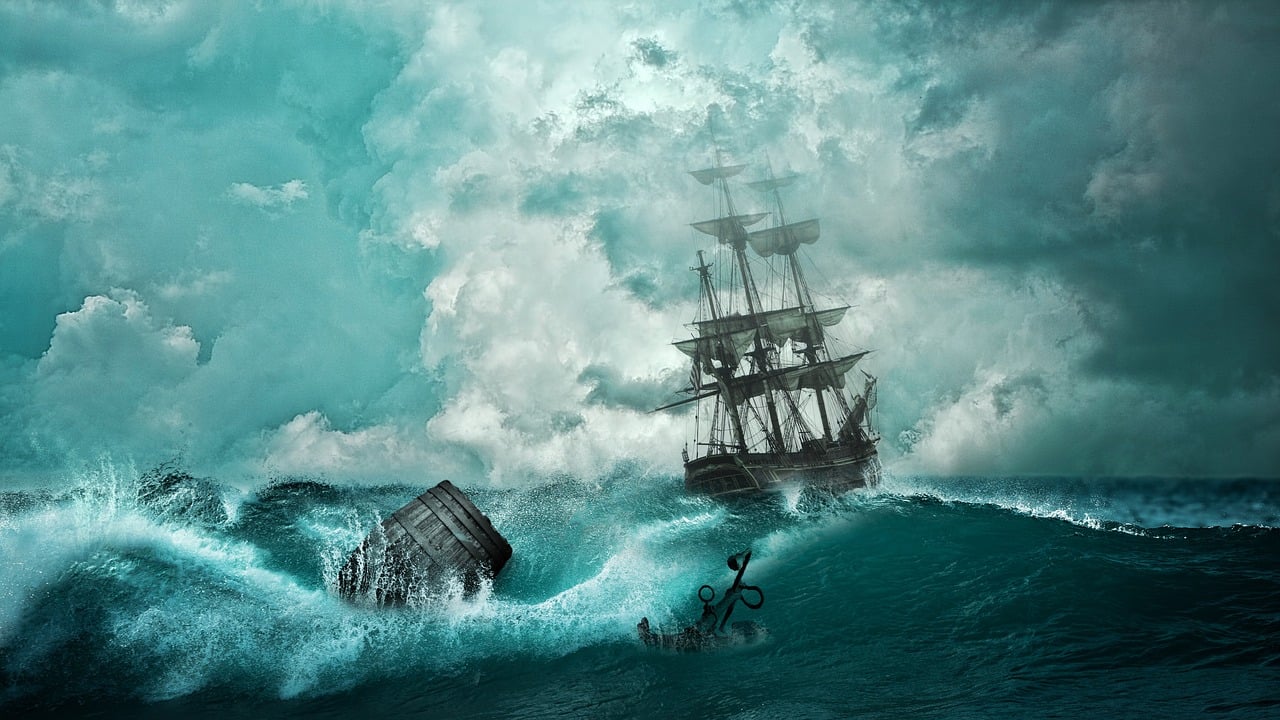

One of the most significant underwater archaeological finds in recent years has been uncovered at the bottom of the Skagerrak Strait, which lies between Norway, Denmark, and Sweden. At a depth of approximately 600 meters, researchers discovered an 18th-century merchant ship in remarkably well-preserved condition, thanks to the unique environmental factors present at such depths.
Archaeologists have already described this discovery as one of the most important maritime finds in Northern Europe. The wreck was initially located by Espen Saastad, a Norwegian shipwreck researcher and watchmaker, who promptly reported its coordinates to the relevant authorities. This led the Norwegian Maritime Museum to organize a major scientific expedition in June 2026.
A Ship Preserved by Time
The vessel, measuring about 22 meters in length, was found upright on the muddy seabed. Experts were astonished to find that the hull remained in excellent condition, much of the deck was still recognizable, and both large anchors remained in place. Significant portions of the wooden lining were also intact. The ship has been described as a true "time capsule" due to the great depth, cold temperatures, and lack of human disturbance that helped preserve it.
A Glimpse Into 18th-Century Trade
Researchers identified the ship as a halio-type merchant vessel, one of the most common trading ships of that era. A brick from the ship's stove, marked with a maker’s stamp from Lübeck, Germany, aided in dating the wreck. Analysis of the porcelain cargo suggests the ship sank around 1750. Despite advances in investigation, the cause of the sinking remains a mystery: there are no major cracks in the hull, no signs of a collision, explosion, or fire. The absence of the rudder, however, may offer a clue to what happened.
Cargo Filled With Treasures
The ship’s cargo turned out to be of exceptional value. The holds are filled with blue and white Chinese porcelain, brown glazed cups from Batavia, glass goblets, bottles, and luxurious European decorative objects. A monogram found on one of the cups may eventually help identify the ship’s owner through historical records.
Exploring the Depths With Robots
At 600 meters deep, the site is too dangerous for human divers. Instead, researchers use remotely operated underwater vehicles (ROVs), robotic arms, and precision suction systems to carefully clear sediment from the wreck and recover artifacts. High-resolution cameras have captured thousands of images, allowing engineers to construct a complete 3D digital model of the ship. This virtual reconstruction lets researchers examine the wreck in detail without risking damage to the delicate remains, marking a significant technological advancement in underwater archaeology.
Bringing History to the Public
Some artifacts have already been transported to conservation and restoration workshops in Oslo. Plans are underway for a future exhibition at the Norwegian Maritime Museum, where the public can learn about the ship that never reached its likely destinations—Lisbon and Amsterdam.
This discovery provides a unique window into 18th-century global trade and offers unprecedented insight into the lives of sailors, established trade routes, and the economic ties between Asia and Europe almost three centuries ago.